
7 Mistakes You're Making with Fulfillment Center Services (and How to Fix Them)
- Lanta LLC
- Mar 27
- 4 min read

TL;DR: Summary of Operational Excellence
Inventory Precision: Eliminate stockouts and overstocking through real-time SKU management.
Order Accuracy: Minimize returns by implementing multi-stage QC checks.
Efficiency: Optimize pick-pack-ship workflows to reduce transit times.
Infrastructure: Utilize contract warehousing to scale without capital expenditure.
Compliance: Avoid chargebacks through retailer-compliant labeling and EDI.
Visibility: Ensure end-to-end transparency across the entire supply chain.
Operational friction is the silent killer of growing e-commerce brands. As order volumes increase, manual processes that once sufficed become liabilities. Scaling requires more than just space; it requires execution, infrastructure, and standardization.
If your brand is struggling with shipping delays, high return rates, or inventory discrepancies, you are likely falling victim to one of these seven common fulfillment mistakes. Here is how to audit your operations and implement high-performance ecommerce fulfillment solutions.
1. Fragmented Inventory Management
Many brands rely on manual spreadsheets or disconnected systems to track stock. This leads to data silos, resulting in "phantom inventory" or unexpected stockouts. Poor inventory management for ecommerce directly impacts customer trust and platform rankings.
The Problem: Inaccurate tracking leads to overselling, which triggers marketplace penalties and customer dissatisfaction. Conversely, overstocking ties up working capital in stagnant goods.
The Fix: Implement a data-backed Warehouse Management System (WMS) that provides a single source of truth.
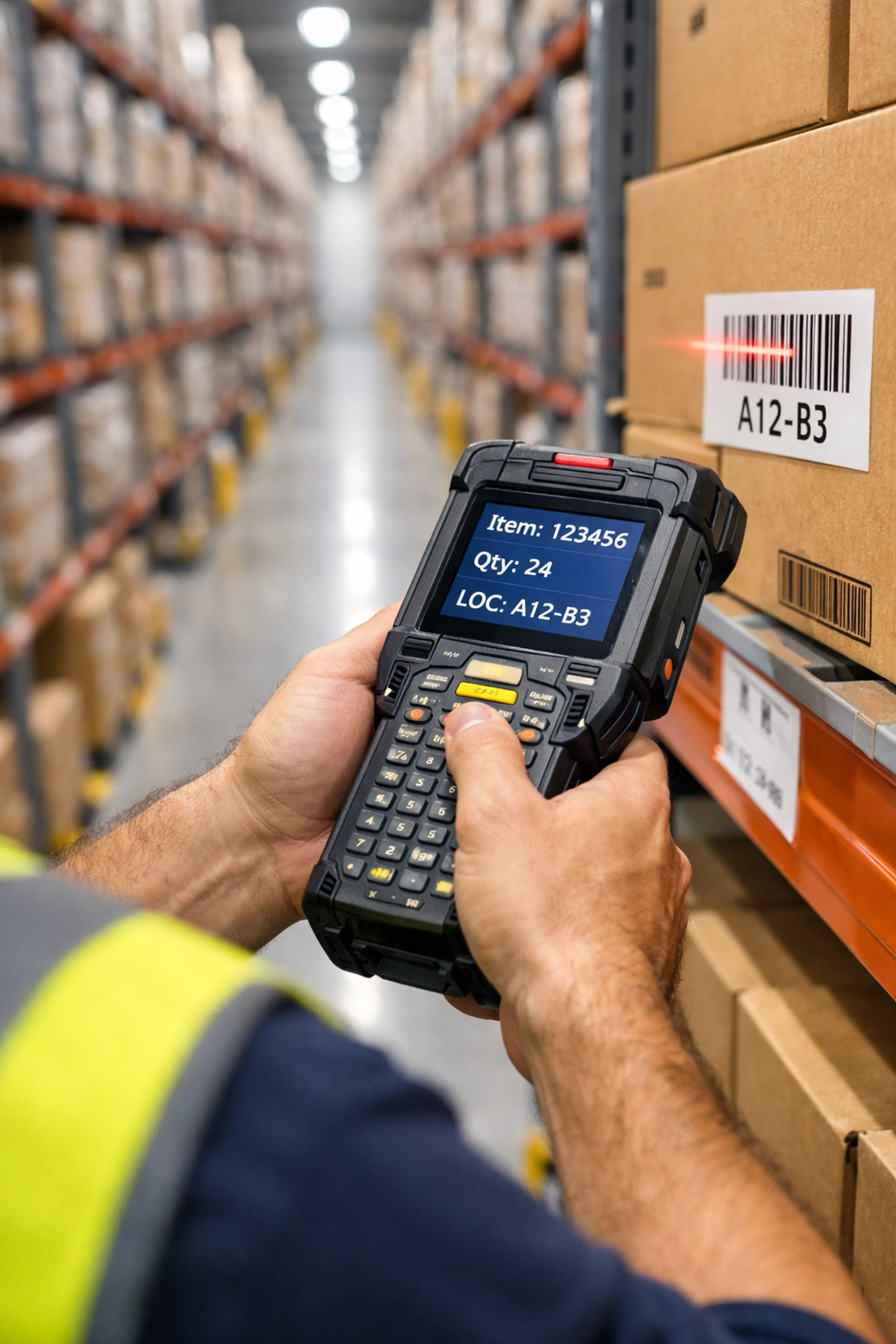
Real-time SKU tracking: Monitor movement at the individual unit level.
Cycle Counting: Shift from annual audits to frequent, rotating counts to maintain 99.9% accuracy.
Automated Reorder Points: Set triggers based on historical velocity to ensure stock is replenished before it hits zero.
2. Neglecting Quality Control in the Pick-Pack-Ship Phase
Speed is irrelevant if the wrong item arrives at the customer's door. High-growth brands often prioritize "fast" over "right," leading to an influx of returns that erode margins.
The Problem: Manual picking processes without verification steps lead to mispicks. Improper packaging choices result in "damages in transit," further increasing the cost of outsourced fulfillment services.
The Fix: Standardize the fast pick-pack-ship process with rigorous verification protocols.
Barcode Scanning: Every item must be scanned during picking and again during packing to ensure SKU matches the order.
Weight Verification: Use scales at packing stations to flag orders where the actual weight deviates from the calculated weight of the SKUs.
Performance-driven Packing: Select packaging based on product fragility and dimensional weight (DIM) to reduce costs and damage risk.
3. Inefficient Warehouse Layout and Zoning
Time is the most expensive commodity in logistics. If warehouse personnel are walking miles every shift due to poor layout, your fulfillment costs will skyrocket as you scale.
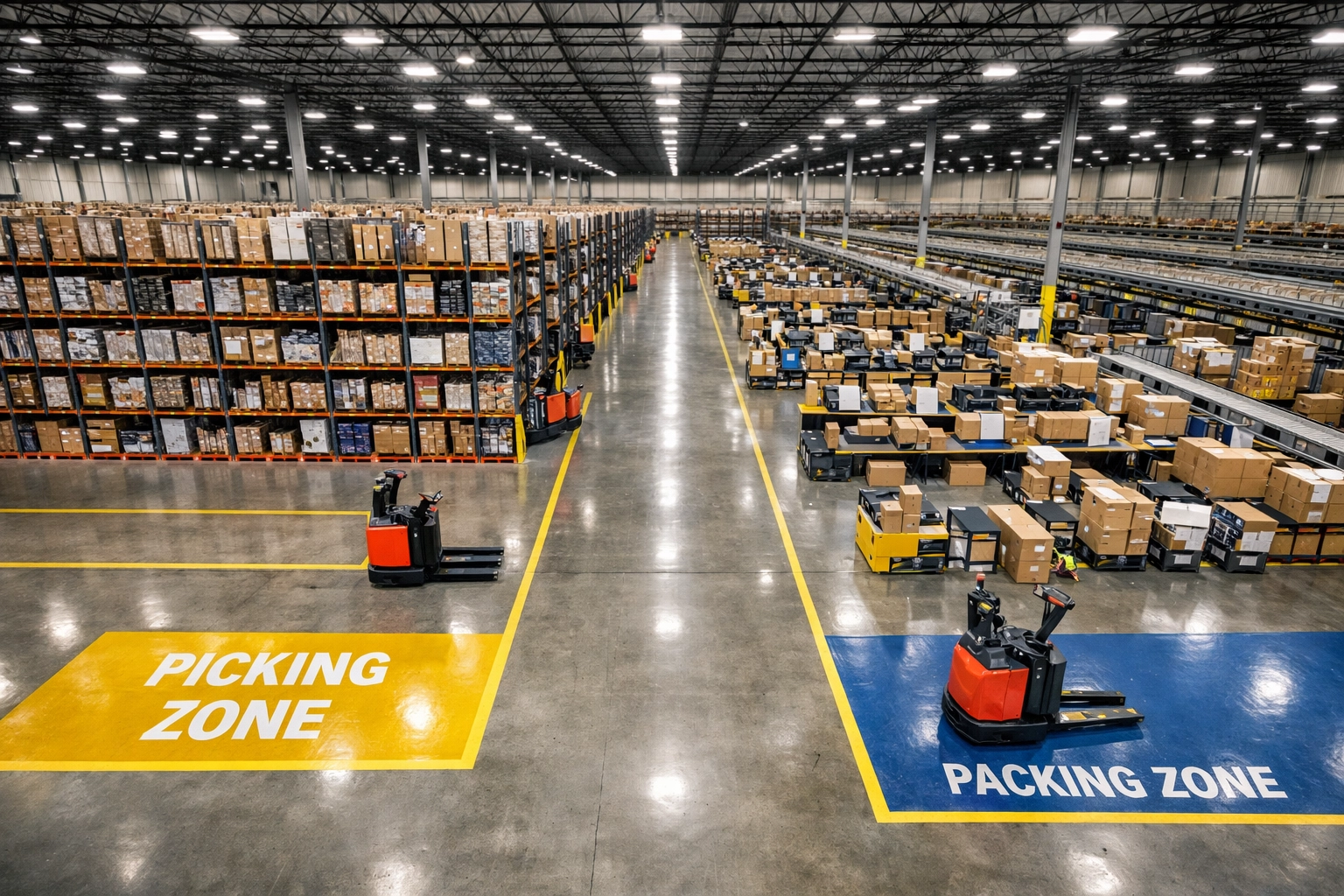
The Problem: High-velocity SKUs are often buried at the back of the facility, or related items are stored in opposite aisles. This "friction" slows down the entire fulfillment center services pipeline.
The Fix: Adopt a strategic infrastructure approach to warehouse design.
ABC Analysis: Store "A" items (top 20% of sellers) nearest to the packing stations.
Zone Picking: Assign staff to specific zones to minimize travel time and increase familiarity with product locations.
Cross-docking: For high-demand items, move stock directly from receiving to shipping, bypassing long-term storage entirely.
4. Underestimating Scalability and Capacity Needs
Growth is rarely linear. Many brands outgrow their secure warehousing provider during peak seasons (Q4), leading to massive bottlenecks and missed delivery windows.
The Problem: Relying on rigid contract warehousing that cannot flex with seasonal spikes. When capacity is exceeded, organization breaks down, and errors proliferate.
The Fix: Partner with an execution-focused logistics provider like Lanta LLC that offers scalable space and labor.
Flexible Footprint: Ensure your provider can allocate additional square footage during peak periods without long-term commitments.
Labor Elasticity: Your fulfillment partner should have the infrastructure to scale headcount rapidly to handle 10x order volume spikes.
Standardized SOPs: Scalability relies on repeatable processes that new personnel can adopt immediately.
5. Resistance to Technological Automation
Manual data entry is a significant risk factor. Manually transferring orders from an e-commerce platform to a shipping tool introduces human error and delays.
The Problem: Lack of integration between the sales channel and the fulfillment center. This leads to "shipping lag," where the order is placed but doesn't enter the warehouse queue for 24-48 hours.
The Fix: Prioritize ecommerce fulfillment solutions that offer native API integrations.
Automated Order Import: Orders should flow directly from Shopify, Amazon, or Walmart into the WMS.
Electronic Data Interchange (EDI): Essential for B2B and retail compliance, ensuring documents like purchase orders and invoices are exchanged instantly.
Automated Tracking Updates: Push tracking numbers back to the customer the moment the label is generated.

6. Ignoring Retailer Compliance Standards
For brands expanding into big-box retail or wholesale, compliance is non-negotiable. Failing to follow specific routing guides results in "chargebacks": heavy fines that can wipe out the profit from a large order.
The Problem: Non-standard pallet configurations, missing Advanced Shipping Notices (ASN), or incorrect labeling. These errors lead to shipment refusals at the retailer's distribution center.
The Fix: Utilize fulfillment center services with a dedicated focus on retail standards.
Custom Labeling: Implement GS1-128 labeling and specific retailer-required packing slips.
ASN Precision: Ensure ASNs are transmitted before the shipment arrives at the destination.
Freight Optimization: Use centralized scheduling tools to coordinate with carriers and meet strict delivery appointments.
7. Zero Visibility into Performance Metrics
You cannot optimize what you do not measure. Many brands view fulfillment as a "black box" where orders go in and packages come out, without understanding the underlying costs or efficiencies.
The Problem: Lack of cross-functional visibility. If you don't know your "Cost per Order" or "Order Accuracy Rate," you cannot make informed strategic decisions.
The Fix: Demand a performance-driven reporting suite from your logistics partner.
Real-time Dashboards: Access 24/7 data on order status, inventory levels, and return rates.
KPI Tracking: Monitor metrics such as Order Cycle Time, Picking Accuracy, and Shipping Cost per SKU.
Cost Transparency: Use data-backed insights to identify where shipping spend can be reduced through better carrier selection or zone skipping.

Driving Growth through Operational Discipline
Fulfillment is no longer a back-office function; it is a core component of the customer experience. By eliminating these seven mistakes, brands transition from reactive troubleshooting to proactive scaling.
At Lanta LLC, we specialize in the execution of complex logistics. Our contract warehousing and outsourced fulfillment services are designed for brands that require precision, stability, and speed. We provide the infrastructure you need to turn your supply chain into a competitive advantage.
Stop managing friction and start managing growth.
Optimize your fulfillment today.
Connect with us for more industry insights and operational standards: Lanta LLC on LinkedIn
Comments