Freight Pulse & Law Update : September 3, 2026

September 3, 2026 : 19:00 ET
Global freight capacity is tightening across ocean, port, and truck networks at the same time. The Panama Canal is cutting transits, European ports are entering strike windows, Mundra is restricting empty-container flows, and U.S. truckload tender rejections have moved above 14% ahead of Labor Day.
For shippers, the message is direct: protect your operating margin with earlier decisions, better documentation, and real-time visibility.
What are the biggest freight disruptions today?
Panama Canal capacity falls to 34 vessels, then 32
The Panama Canal Authority is operating at approximately 34 daily transits beginning today, with capacity scheduled to fall to 32 vessels per day on September 15.
The reported allocation is:
9 Neopanamax slots
25 Panamax slots today
23 Panamax slots from September 15
Total capacity: 34 vessels now, 32 vessels later this month
Drought conditions and reduced water availability continue to constrain the canal. Slot prices reflect the shortage. A South Korean LPG carrier reportedly paid $5.3 million for a single transit slot on September 1, exceeding the previous reported record of approximately $4.6 million. Panama Canal Authority and gCaptain provide additional context.
Shipper action: Ask carriers whether your booking depends on an auctioned slot, a revised draft restriction, or a potential route change. Build extra time into Asia–U.S. East Coast and Gulf Coast schedules, especially for high-volume or draft-sensitive cargo.
Northern European port strikes disrupt rail and terminal operations
A 48-hour warning strike at German seaports began with the late shift on September 2 and continues through September 4. In Hamburg, the action includes HHLA terminals and Eurogate.
Eurogate rail schedules show blocked or cancelled slots, and container deliveries, pickups, and transshipment activity are expected to face severe restrictions. Contargo’s port advisory and Trans.info’s rail disruption report outline the operational impact.
On Friday, September 4, Dutch port workers are also expected to strike for approximately eight hours across Rotterdam, Amsterdam, and Zeeland. Container handling and inland intermodal activity may be suspended or sharply restricted during the stoppage. The Loadstar has reported on the combined disruption.
Shipper action: Freeze nonessential terminal moves during the affected windows. Reconfirm rail appointments, free time, chassis availability, and truck pickup windows in writing. Do not assume a vessel arrival equals cargo availability.

Why is Mundra facing an empty-container disruption?
Adani Ports & SEZ introduced a new policy on September 1 requiring shipping lines to nominate empty containers to designated yards inside the Mundra port and SEZ area. External depot codes have been frozen.
Depot operators and approximately 1,500 transporters have responded with an operational stoppage. Industry estimates indicate that roughly 5,000 containers per day could be affected, including empty returns, empty releases for factory stuffing, and related laden moves.
Exporters using Mundra should expect:
Restricted access to traditional external depots
Longer truck queues and reduced equipment availability
Higher risk of missed factory-stuffing and sailing cutoffs
Potential changes to inland routing and pickup instructions
Read the Mundra disruption report from Breakbulk before dispatching equipment.
Shipper action: Obtain written confirmation of the active empty yard, acceptance rules, truck appointment process, and final gate-in cutoff. For time-sensitive cargo, evaluate alternate Indian gateways rather than waiting for congestion to compound.
What does the U.S. trucking market signal ahead of Labor Day?
National truckload tender rejections have moved above 14% ahead of Labor Day. That indicates contracted capacity is being rejected at a higher rate as carriers prioritize stronger spot-market opportunities.
The practical effects are straightforward:
Routing guides may fail more frequently.
Spot-market rates are likely to remain firm or rise.
Reefer and flatbed shippers may face more severe pressure.
Midwest and Southeast freight can require additional lead time.
Same-day recovery becomes more expensive and less reliable.
Treat a 14% rejection environment as a capacity warning, not merely a pricing statistic. FreightWaves market reporting shows how uneven regional conditions can become.
Shipper action: Tender critical loads earlier, widen delivery windows where possible, and pre-qualify backup carriers before the holiday weekend. Use logistics software to compare tender acceptance, lane performance, appointment delays, and spot exposure in one operating view.
Could Strait of Hormuz disruption extend beyond 2026?
Mitsui O.S.K. Lines has indicated that a meaningful return to normal Hormuz operations may not occur by year-end. That does not establish a fixed timeline for recovery, but it does mean supply chain teams should not build 2027 plans around a rapid normalization.
The Strait remains a material risk for energy, chemical, and project cargo flows. Rerouting, vessel security concerns, insurance costs, and longer voyage times can continue affecting freight budgets even if traffic partially resumes.
Shipper action: Classify Hormuz-dependent lanes as contingency-sensitive. Review alternate origins, ports, inland corridors, inventory buffers, and contractual force-majeure language. Bloomberg’s report on MOL’s outlook provides additional detail.

What shipping law changed on September 1?
FMC Charge Complaints now have a clearer formal path
The Federal Maritime Commission’s Charge Complaint Procedures rule became effective September 1, 2026. Parties disputing demurrage or detention charges may use the interim charge complaint process or pursue a traditional formal or small-claims proceeding.
When a qualifying matter proceeds formally, an Administrative Law Judge or Small Claims Officer must treat it as a Charge Complaint. The common carrier bears the burden of establishing that the disputed demurrage or detention charges were reasonable under the applicable FMC framework.
Shippers should preserve:
Bills of lading and invoices
Free-time terms and appointment records
Gate-closure notices
Terminal correspondence
Proof of attempted pickup or return
Carrier dispute responses
Review the FMC final rule before filing or escalating a dispute. This is an operational summary, not legal advice.
Jones Act waiver extended through November 15
The current Jones Act waiver extension runs through November 15, 2026, but the terms are narrower than earlier versions.
Key requirements include:
Covered cargo must fall within 237 eligible HTS codes
Foreign-flag coastwise movements require a pre-voyage Vessel Availability Request
MARAD must assess whether suitable Jones Act-qualified capacity is available
Covered cargo must be loaded by the waiver deadline
Post-voyage reporting obligations remain relevant
Do not treat the waiver as blanket authorization. Validate the HTS code, vessel, route, cargo, timing, and approval documentation before booking. Holland & Knight’s regulatory summary explains the narrowed framework.
CBP is pushing toward earlier, richer import data
CBP is considering expanded import disclosures and greater supply chain visibility. Existing ocean requirements, including ISF 10+2 and manifest data generally filed at least 24 hours before lading, remain the baseline.
The newer proposal direction would require more complete information about manufacturers, exporters, suppliers, and supporting trade documentation. It does not yet create a confirmed new earlier filing deadline for ocean carriers, but it signals that data quality and pre-arrival visibility will receive more scrutiny. Review the CBP-related Federal Register proposal and coordinate with your customs broker.
Are DOT brake inspections still relevant this week?
Yes. There is no confirmed nationwide brake-specific blitz scheduled for September 3 or Labor Day. However, routine roadside inspections continue year-round, and CVSA’s 2026 Brake Safety Week ran August 23–29, with an additional unannounced Brake Safety Day possible during the year.
Keep commercial vehicles inspection-ready:
Verify brake adjustment and lining condition
Check air hoses, drums, rotors, and leaks
Confirm annual inspection status
Review driver qualification and hours-of-service records
Secure cargo and maintain required documentation
See the CVSA Operation Airbrake schedule for official campaign information.
What should shippers do before the weekend?
Use this short control list:
Reconfirm ocean bookings affected by Panama Canal capacity and European strikes.
Audit all September 4 rail and terminal appointments in Hamburg, Rotterdam, Amsterdam, and Zeeland.
Verify Mundra empty-container instructions directly with the carrier and depot.
Tender Labor Day truckload freight early and activate backup carriers.
Preserve demurrage and detention evidence before disputing invoices.
Check Jones Act eligibility against the 237-code list and complete the Vessel Availability Request process.
Validate importer and manufacturer data before filing or transmitting trade documents.
Keep vehicles and drivers inspection-ready despite the absence of a scheduled brake blitz.
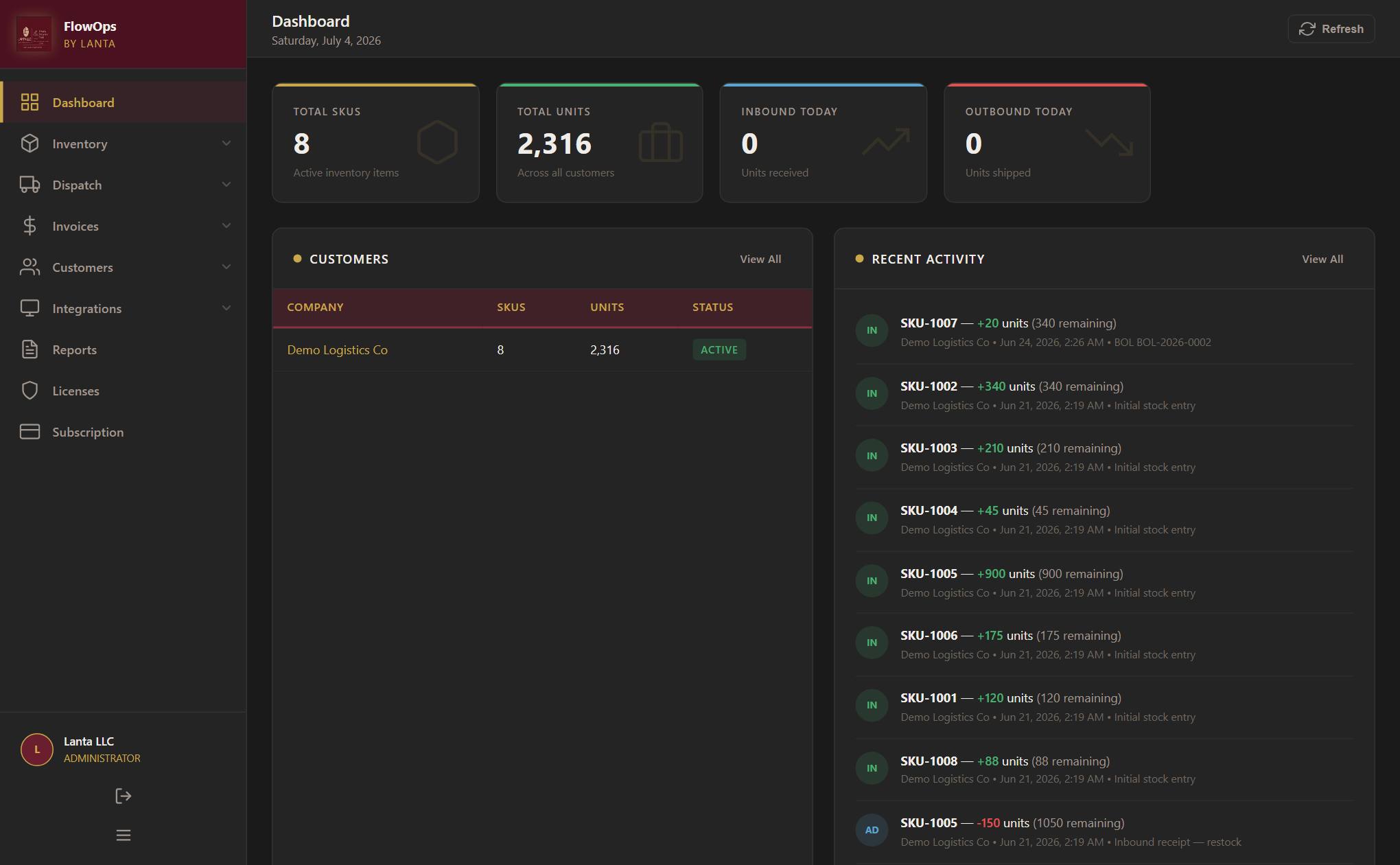
Lanta Logistics combines Mid-Atlantic fulfillment, transportation coordination, secure warehousing, and real-time inventory control from its Glen Burnie warehouse near Seagirt Marine Terminal, I-95, I-695, and BWI. Growing brands can also use FlowOps for inventory, dispatch, appointments, documents, and customer visibility through a connected warehouse management system.
Bottom line: Treat this week as a planning test: contact Lanta Logistics for 3PL fulfillment services, or book a FlowOps demo to replace fragmented spreadsheets and logistics software gaps with one real-time operating view.
Comments