
How to Integrate 1PL Assets With 4PL Strategy for Total Operational Excellence
- Lanta LLC
- Apr 1
- 4 min read

TL;DR: Achieve total operational excellence by blending the control of 1PL physical assets with the strategic orchestration of a 4PL framework. This integration eliminates data silos, optimizes warehouse management services, and leverages third party logistics providers to ensure scalability and precision in enterprise supply chains.
The Paradox of Choice in Modern Logistics
Enterprises today face a fundamental strategic divide: the control of owning assets (1PL) versus the agility of strategic outsourcing (4PL). For years, these were viewed as mutually exclusive. You either managed your own trucks and warehouses or hired a firm to manage everything for you.
In 2026, the market demands a hybrid approach. Total operational excellence is no longer about choosing one model; it is about the seamless integration of internal infrastructure with external intelligence. This is the only way to combat the "chaos tax" that erodes margins.

Defining the Pillars: 1PL Assets vs. 4PL Oversight
To integrate these models, we must first define their roles within a high-performance ecosystem.
1PL (First-Party Logistics): This represents your internal capabilities. Your warehouses, your private fleet, and your personnel. It offers the highest level of operational control and brand consistency.
4PL (Fourth-Party Logistics): This is the "architect" level. A 4PL provider acts as a single point of contact to manage technology, third party logistics providers, and global strategy.
When you integrate 1PL assets into a 4PL strategy, you aren't giving up control. You are empowering your assets with data-backed precision and end-to-end visibility.
The Strategic Integration Framework
Successful integration requires a structured approach. Enterprises must move beyond simple "outsourcing" and toward "synchronized execution." For a deeper dive into this specific structure, view the proven 1PL-4PL integration framework for enterprise operations.
1. Centralized Data Architecture
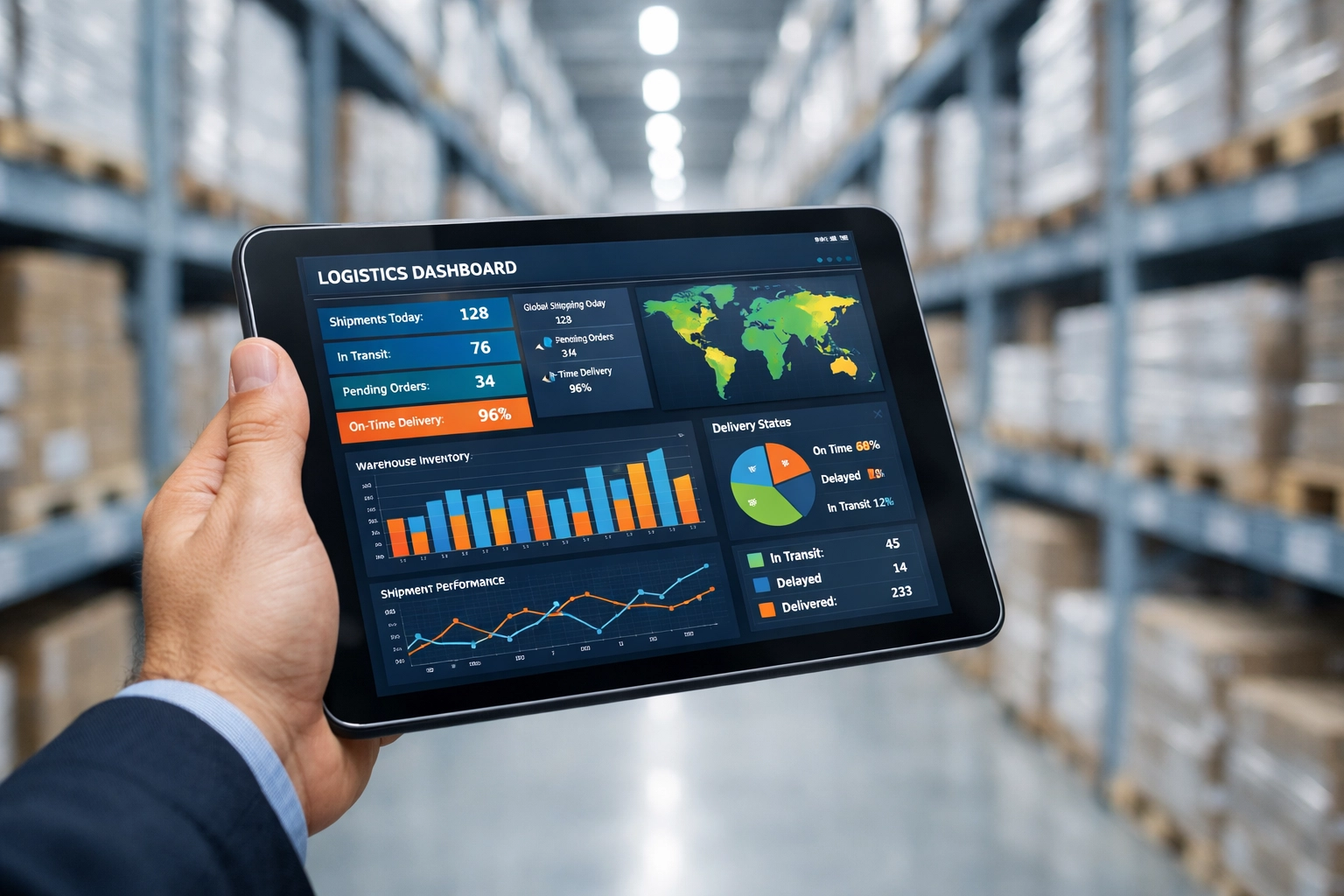
The primary friction point in logistics is information asymmetry. Your internal warehouse team must see the same data as your external carriers. A 4PL layer provides the "control tower" that unifies these streams.
Execution: Implement a unified Transport Management System (TMS) that tracks 1PL fleet movements alongside 3PL capacity.
Standard: Zero-latency data sharing across all nodes.
2. Optimized Warehouse Management Services
Your physical facilities are your greatest capital expense. To maximize ROI, warehouse management services must be performance-driven. This involves more than just storage; it requires high-level SKU management and inventory velocity.
Infrastructure: Use internal 1PL staff for core operations.
Scalability: Use 4PL oversight to trigger overflow support through third party logistics providers during peak seasons.
Leveraging Third Party Logistics Providers Within a 4PL Strategy
A common mistake is viewing third party logistics providers as the final step. In a 4PL-led model, 3PLs are tactical tools managed by the 4PL to support your 1PL foundation.
The Hub-and-Spoke Benefit: Use your 1PL assets for stable, predictable regional routes.
The Surge Benefit: When demand spikes: like the current trucking capacity crunch: the 4PL orchestrates 3PL support to prevent bottlenecks. Understanding the current trucking capacity crunch is vital for Q2 planning.
By using a 4PL strategy, you gain access to a wider network without the overhead of managing fifty different contracts. The 4PL handles the vetting, the rate negotiations, and the performance audits.
Eliminating the "Chaos Tax" Through Precision
Logistics friction silently erodes your bottom line. We call this the "chaos tax." It stems from miscommunication, idle assets, and poor route planning. Integrating assets with strategy eliminates this friction by focusing on execution-focused standards.
Key areas where integration reduces costs:
Cross-functional visibility: Knowing exactly where cargo is, whether it's on a 1PL truck or a 3PL partner's van.
Reduced Deadhead Miles: A 4PL can find backhaul opportunities for your private fleet that an internal team might miss.
Standardized Safety: Implementing daily routines, like the high cost of skipping 10 minutes for stand-ups, ensures safety standards remain high across both internal and external teams.

Why Supply Chain Management Companies are Essential Partners
Large-scale enterprises often lack the internal bandwidth to stay ahead of rapid logistics technology shifts. This is where supply chain management companies like Lanta LLC provide the most value. We provide the strategic layer that makes your physical assets work harder.
The role of a partner is to provide stability and growth. While you focus on product development and market expansion, your logistics partner focuses on:
Risk Mitigation: Predicting disruptions before they hit your P&L.
Performance Metrics: Moving from "on-time" to "flawless execution."
Infrastructure Optimization: Evaluating if your current contract warehousing setup is positioned for future growth.
The Mid-Atlantic Relief Valve: A Tactical Example
Integration often reveals tactical opportunities. For East Coast operations, gridlock is a constant threat. A 4PL strategy might identify a tactical bypass for East Coast gridlock by utilizing specific 1PL assets in the Mid-Atlantic region to avoid major hubs.
This type of data-backed decision-making is only possible when you have the bird's-eye view of a 4PL and the boots-on-the-ground control of 1PL assets.

Implementation Checklist for Operational Excellence
To begin the integration process, evaluate your current state against these performance-driven metrics:
Audit Physical Assets (1PL): Is your fleet utilization above 85%? Are your warehouses running at peak efficiency?
Evaluate Current 3PL Relationships: Are your third party logistics providers operating in silos, or are they integrated into your reporting?
Identify Data Gaps: Can you see real-time inventory levels across your entire network?
Engage a 4PL Architect: Partner with supply chain management companies to design the intelligence layer that will oversee the integration.
Standardize Warehouse Management Services: Ensure that every facility, whether owned or leased, follows the same SKU management and safety protocols.
Scaling With Precision
The ultimate goal of 1PL and 4PL integration is scalability. When your strategy is robust, adding a new warehouse or entering a new market doesn't break the system. It simply scales the existing framework.
Enterprises that master this integration move faster, spend less, and provide a superior customer experience. They turn logistics from a cost center into a competitive advantage.
If you are ready to eliminate friction and achieve total operational excellence, explore our services or book a consultation to see how we can optimize your enterprise supply chain.
For more insights on high-level logistics strategy, visit our blog.
Follow Lanta LLC on LinkedIn for daily updates on logistics execution and supply chain excellence:https://www.linkedin.com/company/lanta-llc/
Comments