Mastering Inventory Management for E-Commerce: How Real-Time Visibility Prevents Stockout Disasters

Inventory management for ecommerce works best when every sale, receipt, return, transfer, and shipment updates one shared inventory record immediately. Real-time visibility shows available, reserved, inbound, and in-transit stock across channels, helping brands prevent overselling, identify replenishment risks, and fulfill orders with confidence.
Why do ecommerce brands experience stockouts?
Ecommerce stockouts usually begin with disconnected systems, delayed updates, or inaccurate warehouse counts. When storefronts, marketplaces, spreadsheets, and fulfillment teams use different data, a product can appear available online after the last unit has already been sold or reserved.
Common warning signs include:
Manual inventory reconciliation
Batch updates instead of live synchronization
No location-level stock visibility
Untracked returns, damages, or transfers
Low-stock alerts handled by email or memory
Shopify notes that U.S. logistics costs rose 19.6% in 2022, with carrying costs representing more than half of that increase. Better visibility is not merely a technology upgrade; it is a margin-protection strategy. Read Shopify’s real-time inventory guide.
How does real-time visibility prevent stockouts?
Real-time visibility prevents stockouts by replacing assumptions with an accurate available-to-promise quantity. Each barcode scan updates inventory as goods move through receiving, put-away, picking, packing, shipping, and returns, giving ecommerce channels a consistent source of truth.

Track these critical metrics:
Inventory record accuracy
Stockout and order fill rates
Days of inventory cover
Sell-through and turnover
Reserved versus available units
Inbound and in-transit inventory
What should an ecommerce inventory system include?
A reliable warehouse management system should connect sales channels, warehouse operations, and transportation data without forcing teams to re-key information. Look for barcode workflows, SKU-level audit trails, low-stock alerts, lot and expiration tracking, and integrations with Shopify, Amazon, and other storefronts.
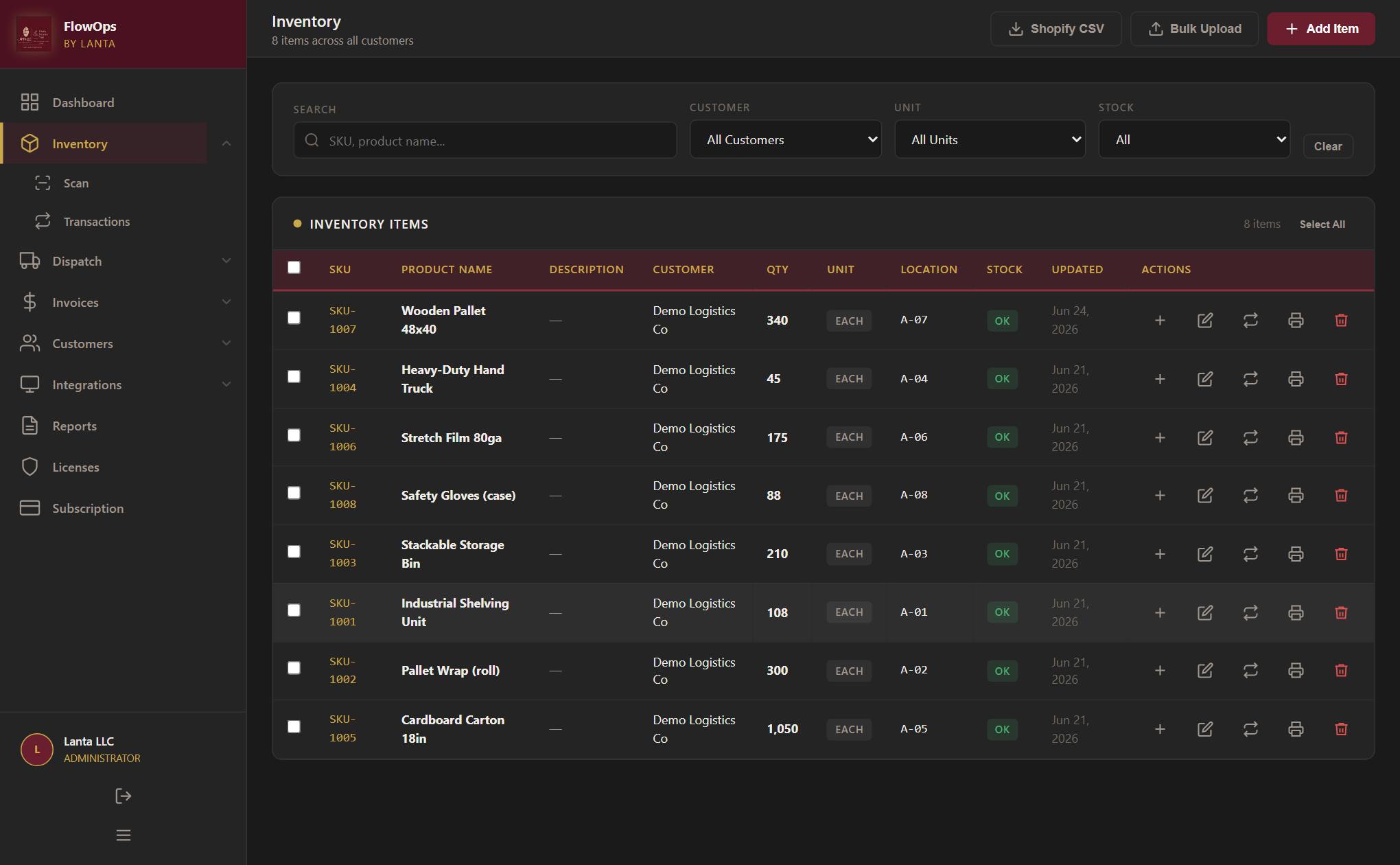
Third party logistics providers should also provide customer-facing visibility. Lanta Logistics supports growing brands through 3PL fulfillment services, including inventory control, pick-pack-ship execution, and returns management.
How can Lanta Logistics improve inventory performance?
Lanta Logistics combines a Glen Burnie warehouse, Mid-Atlantic fulfillment infrastructure, and FlowOps logistics software to coordinate inventory across supply chain touchpoints. Whether you need a food-grade warehouse, a Hazmat certified 3PL, or scalable ecommerce execution, the system keeps operators and customers aligned.

See how FlowOps by Lanta provides real-time visibility through wms.lantallc.com. Connect with Lanta Logistics to reduce stockout risk, improve fulfillment accuracy, and build a more accountable supply chain.
Comments