
Why 1PL–4PL Operational Excellence Will Change the Way You Scale
- Lanta LLC
- Mar 29
- 4 min read

TL;DR: Scaling a logistics network requires transitioning from internal ownership (1PL) to strategic orchestration (4PL). By leveraging third party logistics providers and advanced warehouse management services, enterprises can eliminate operational friction, reduce capital risk, and achieve flawless execution at scale.
The Evolution of Logistics Excellence
In the current enterprise landscape, growth is often throttled by infrastructure. Businesses that attempt to manage every moving part internally: from the warehouse floor to the final mile: eventually hit a "complexity wall." This wall is where fixed costs rise faster than revenue and where operational friction erodes margins.
Achieving operational excellence requires a deep understanding of the 1PL through 4PL spectrum. It is not just about moving boxes; it is about high-level supply chain coordination.
The Infrastructure Trap: Why 1PL Limits Growth
In a 1PL (First-Party Logistics) model, the manufacturer or trader handles all logistics functions internally. You own the trucks, you lease the warehouses, and you manage the staff.
The reality of 1PL at scale:
High Capital Expenditure: Heavy investment in real estate and equipment.
Inflexibility: Difficulty in adjusting capacity to meet seasonal surges.
Operational Friction: Management focus is diverted from product innovation to fleet maintenance and labor disputes.
Risk Concentration: Any disruption in your internal network halts the entire business.
For many scaling brands, 1PL becomes a bottleneck. To move faster, you must move lighter. Transitioning to higher tiers of logistics integration allows for scalability without the anchor of heavy assets.
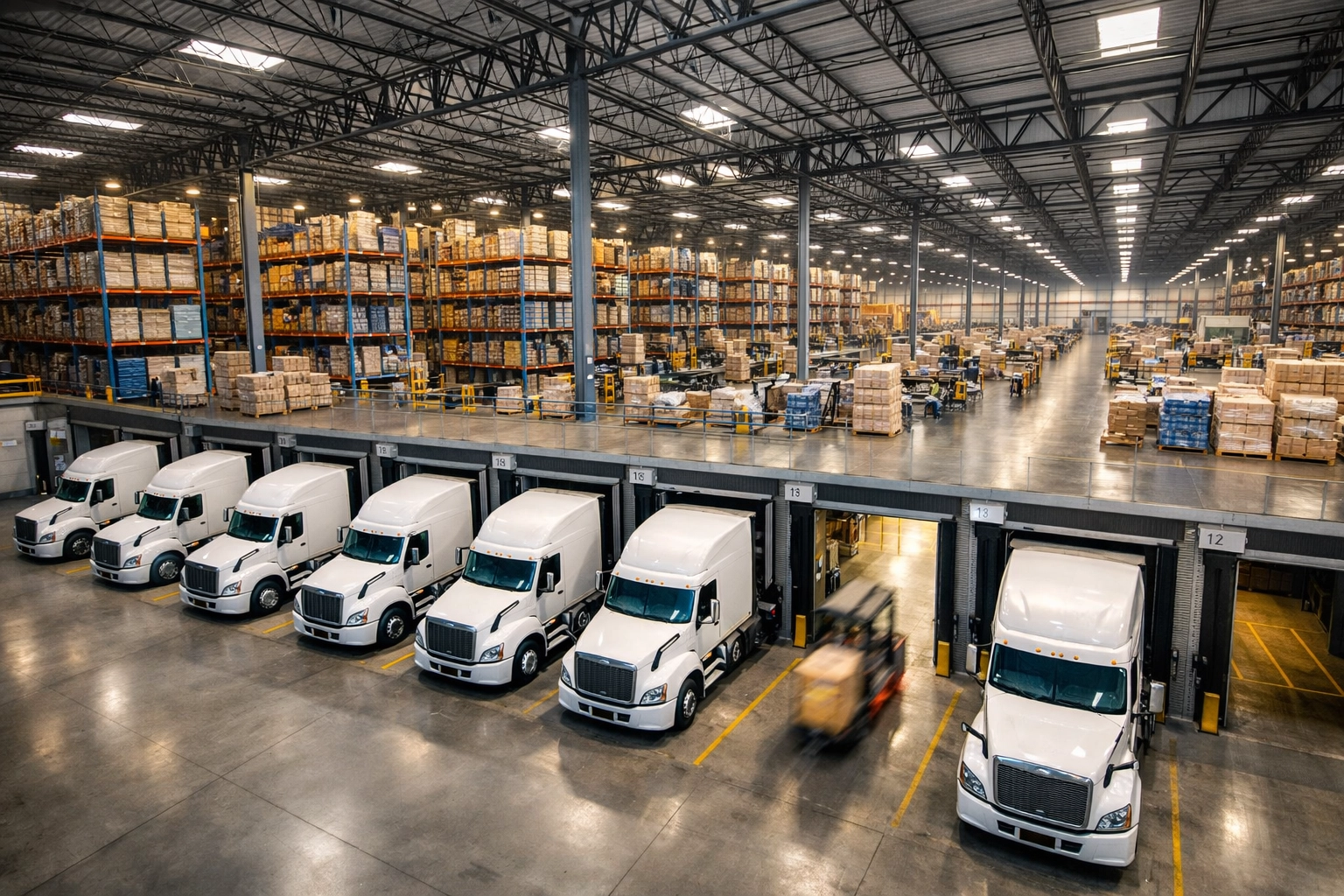
Third Party Logistics Providers (3PL): The Execution Layer
The shift to third party logistics providers (3PL) is the first step toward professionalized scaling. A 3PL takes over the physical execution: warehousing, picking, packing, and transportation.
Why enterprises leverage 3PL partners:
Performance-Driven Execution: 3PLs specialize in high-volume throughput and SKU management.
Geographic Flexibility: Utilize facilities in strategic locations, such as the Mid-Atlantic relief valve, to bypass coastal gridlock.
Technology Access: Immediate access to professional-grade warehouse management services without the development costs.
Reduced Labor Burden: The 3PL manages the workforce, allowing you to focus on your core business.
However, simply hiring a 3PL isn't enough for complex enterprises. As you add more partners, the need for centralized oversight becomes critical. This is where many businesses experience logistics friction that silently erodes the bottom line.
The 4PL Advantage: Orchestration and Coordination
A 4PL (Fourth-Party Logistics) provider acts as an integrator. While a 3PL focuses on the "how" of shipping, supply chain management companies acting as 4PLs focus on the "why" and the "where."
A 4PL manages the 3PLs, carriers, and warehouse providers on your behalf. They serve as a single point of contact, providing cross-functional visibility across the entire network.
Key 4PL Strategic Pillars:
Neutrality: A 4PL provides impartial advice on the best carriers and routes, unchained from owning specific assets.
Data Analytics: Using proprietary software to identify rate shocks and capacity crunches before they impact your Q2 reality.
Project Management: Overseeing complex integrations and multi-node distributions.
Network Optimization: Implementing strategies like strong zone skipping to defeat last-mile surges and reduce costs.

Warehouse Management Services: The Digital Foundation
Operational excellence is impossible without data integrity. Modern warehouse management services (WMS) are the digital nervous system of any successful logistics operation.
At Lanta LLC, we prioritize high-standard WMS integration to ensure that inventory data is accurate in real-time. This eliminates the "ghost inventory" issues that lead to backlogs and customer dissatisfaction.
The WMS Performance Checklist:
Real-Time SKU Visibility: Know exactly what is on the shelf and what is in transit.
Automated Replenishment: Prevent stock-outs through data-backed triggers.
Optimized Pick Paths: Reduce labor time and increase fulfillment speed.
Integration Capabilities: Seamlessly connect with your ERP and e-commerce platforms for zero-backlog evenings.
Structured Logistics for Enterprises
For enterprise-level operations, "good enough" is a failure. Scalability requires structured logistics: a set of repeatable, documented processes that guarantee performance regardless of volume.
This includes tactical routines like the Saturday Standard and daily stand-ups. These are not just administrative tasks; they are safety and speed tools that ensure every package leaves the facility on time, every time.

Bridging the Gap: The Lanta LLC Framework
Lanta LLC specializes in the 1PL-4PL integration framework. We don't just provide space; we provide a performance-driven strategy that aligns your physical operations with your business goals.
Whether you are navigating a trucking capacity crunch or looking to fix fulfillment center mistakes, our approach is rooted in precision and reliability.
Our Commitment to Excellence:
Standardization: Eliminating variance in warehouse processes.
Infrastructure: Providing the physical and digital tools required for high-volume scale.
Execution: Maintaining a serious, disciplined outlook on every shipment.
Growth: Designing logistics networks that are an asset, not a liability.
Scaling with Precision
Logistics is no longer a back-office function. It is a competitive advantage. By moving from a fragmented 1PL model to an orchestrated 4PL strategy, your business gains the agility to respond to market shifts without sacrificing performance.
If your current third party logistics providers are not delivering the visibility or speed you require, it is time to reassess your warehouse management services and your broader supply chain strategy.
Operational excellence isn't an accident. It is the result of structured, data-backed coordination.
For more insights into high-level supply chain coordination and execution-focused logistics, visit our website at https://www.lantallc.com.
Connect with us on LinkedIn for daily updates on logistics performance:https://www.linkedin.com/company/lanta-llc/
Comments