
How to Integrate 1PL Assets With 4PL Strategy Using Advanced Warehouse Management Services
- Lanta LLC
- 6 days ago
- 4 min read

TL;DR: Integrating 1PL assets with a 4PL strategy allows enterprises to maintain asset control while leveraging high-level strategic orchestration. Success depends on advanced warehouse management services, real-time data synchronization, and a phased integration framework that prioritizes operational excellence and scalability.
The Evolution of Strategic Logistics Ownership
In the traditional logistics model, enterprises often faced a binary choice: maintain total control through First-Party Logistics (1PL) or outsource the entire headache to third party logistics providers (3PL) or Fourth-Party Logistics (4PL) orchestrators.
Today’s market reality demands a hybrid approach. For scaling enterprises, the goal is no longer just "outsourcing": it is integration. By combining your owned assets (trucks, warehouses, and personnel) with a 4PL’s strategic oversight, you create a supply chain that is both grounded in physical reality and optimized by global intelligence.
This integration isn't just a technical upgrade; it is a shift in infrastructure management. To understand the "why" behind this shift, you can explore why 1PL-4PL strategy matters for modern operational excellence.
The Foundation: Warehouse Management Services as the Bridge
The primary friction point in combining 1PL and 4PL models is data silos. Your internal warehouse management services must communicate seamlessly with the 4PL’s strategic layer.
Without this bridge, you suffer from "blind execution." You have the assets, but you lack the visibility to deploy them with precision.
Key Integration Requirements:
WMS/TMS Synchronization: Your internal Warehouse Management System (WMS) must feed real-time inventory and throughput data into the 4PL’s predictive AI.
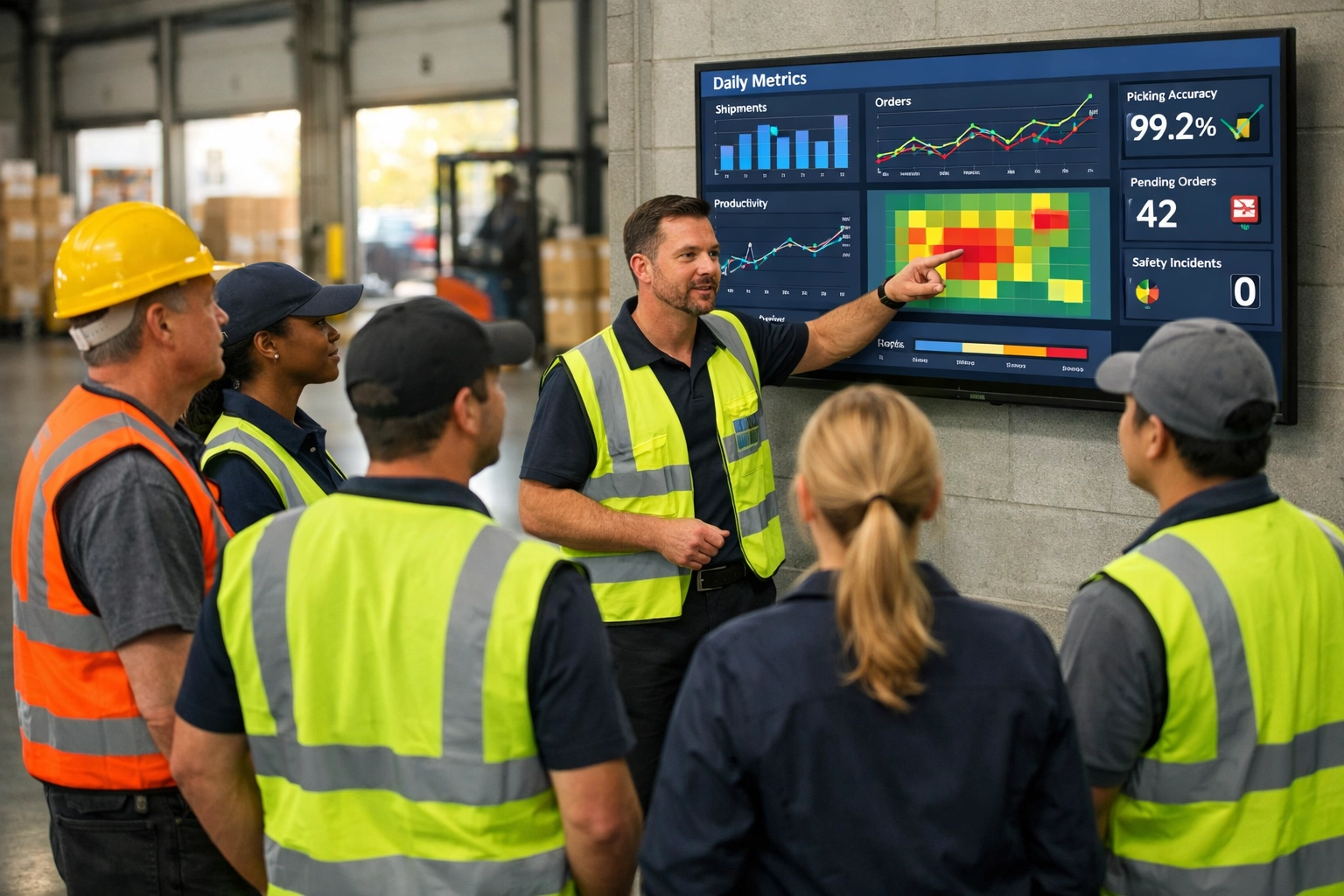
Unified Dashboards: Decision-makers need a single pane of glass to view both internal asset performance and external partner status.
Cross-Functional Visibility: Ensuring that your 1PL warehouse floor knows exactly what the 4PL strategic planners have forecasted for the next quarter.

1PL Control Meets 4PL Scalability
Why keep 1PL assets at all? Because ownership provides stability. When capacity crunches hit: as seen in recent trucking capacity shifts: owning your core assets provides a safety net.
However, 1PL assets are often rigid. A 4PL strategy adds the "elasticity" required for enterprise growth. Leading supply chain management companies use a 4PL layer to:
Analyze Under-Utilized Assets: Identifying gaps where your 1PL warehouses are running at 60% capacity and filling that space with high-margin inventory.
Optimize Route Density: Using 4PL logic to ensure your 1PL fleet isn't running empty backhauls.
Risk Mitigation: Deploying a 4PL "relief valve" when internal assets are overwhelmed by seasonal surges.
The Proven Framework for Integration
Integration does not happen overnight. It requires a structured, performance-driven approach. At Lanta LLC, we advocate for a phased framework that reduces risk and eliminates friction.
Phase 1: The Audit and Mapping
Before connecting systems, you must audit your 1PL capabilities. What are your actual throughput limits? What is your SKU accuracy? Understanding these benchmarks is the first step toward 1PL-4PL logistics integration.
Phase 2: Technical Connectivity
Integrate your warehouse management services with the 4PL’s oversight technology. This involves API connections that allow for real-time reporting on inventory levels, order status, and labor efficiency.
Phase 3: Strategic Alignment
Shift your internal team’s focus from "managing tasks" to "executing strategy." The 4PL provides the roadmap; your 1PL assets provide the engine. For a deeper dive into this process, review our proven 4PL integration framework for enterprises.

Overcoming Operational Friction
The greatest enemy of a hybrid 1PL-4PL model is friction. Friction occurs when the strategic plan (4PL) is disconnected from the tactical execution (1PL).
Often, this friction is silent. It looks like a 10-minute delay in a morning stand-up or a minor inventory discrepancy that compounds over a week. We call this the 10,000-dollar morning: where small inefficiencies in your warehouse management services result in massive bottom-line erosion.
To eliminate friction, enterprises must:
Standardize the Morning Sprint: Every 1PL facility must start with a performance-focused stand-up.
Implement Evening Safeguards: Ensure that the day’s data is scrubbed and synced with the 4PL orchestrator before the shift ends.
Focus on SKU Management: High-velocity SKUs should be handled by 1PL assets for maximum control, while slower-moving or specialized items might be diverted to broader third party logistics providers.
Why Scalability Starts With Precision
The ultimate goal of integrating 1PL assets with 4PL strategy is scalability. When your infrastructure is performance-driven, you can scale without the "chaos tax" that usually accompanies growth.
By leveraging advanced warehouse management services, you ensure that every square foot of your warehouse and every mile of your fleet is contributing to the overall strategic objective.
Whether you are dealing with last-mile surges or East Coast gridlock, a hybrid 1PL-4PL model provides the tactical bypass needed to maintain high performance.
Execution-Focused Logistics
In the world of supply chain management companies, vision is common, but execution is rare. Integrating 1PL assets with a 4PL strategy is the most robust way to ensure your vision is backed by physical capability.
It allows your enterprise to:
Maintain ownership of core assets.
Achieve visibility through advanced 4PL tech.
Drive efficiency via specialized warehouse management services.
Operational excellence is not an accident; it is the result of structured integration and relentless focus on standards. If you are ready to change the way you scale, it is time to look at your 1PL/4PL balance.
Ready to optimize your supply chain infrastructure?
Lanta LLC specializes in high-level coordination and operational excellence for scaling enterprises. Let’s discuss how to integrate your assets with a winning strategy.
Connect with us on LinkedIn:Lanta LLC LinkedIn
Comments